
In the vibrant coasts of Ecuador, a sustainable cacao company works in partnership with 2,000 smallholder farmers who collectively manage 13,500 hectares of cacao.
These farms thrive in fertile, mineral-rich soils and under excellent agroecological conditions, ensuring both quality and environmental balance with sustainable practices.
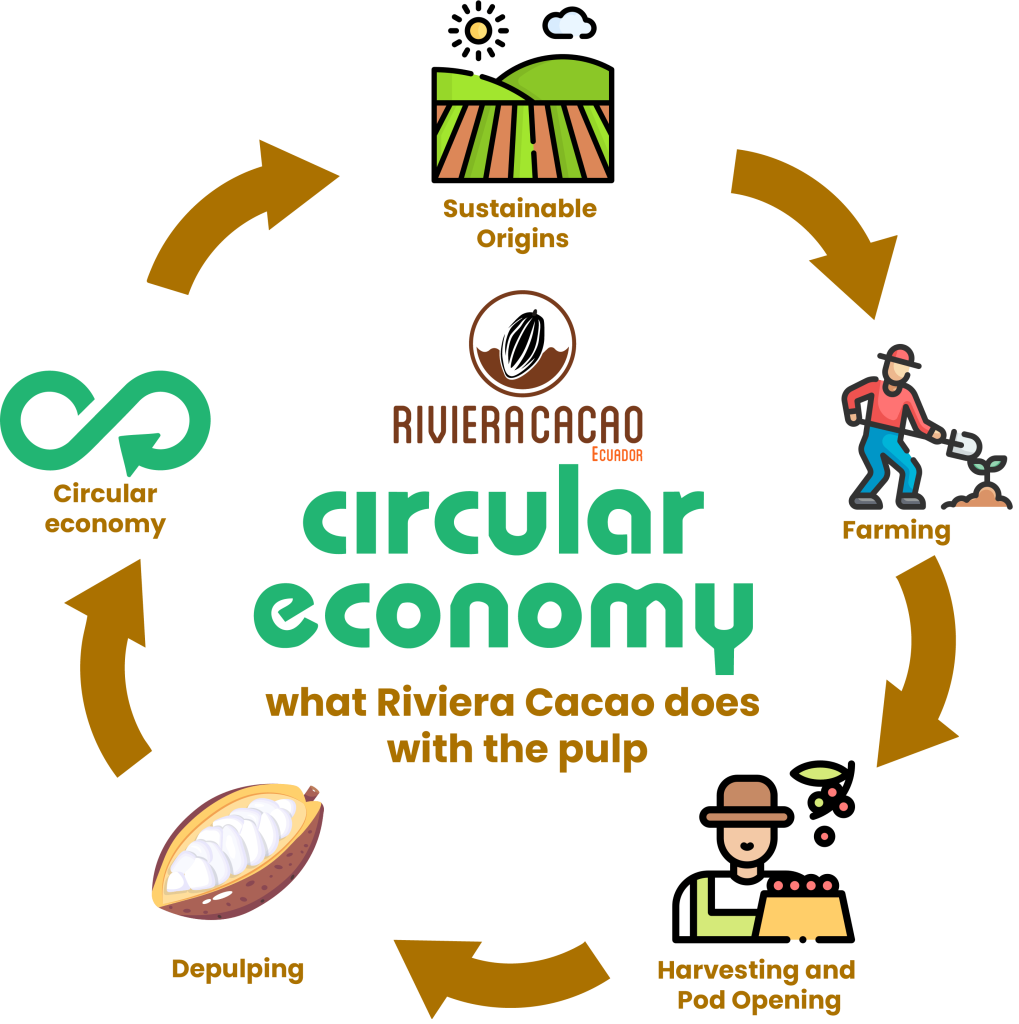
The cacao pods are carefully harvested and split open to reveal beans covered in a sticky, sweet mucilage. While some cacao companies once discarded this pulp, Riviera Cacao ensures that every part of the fruit is valued and utilized.
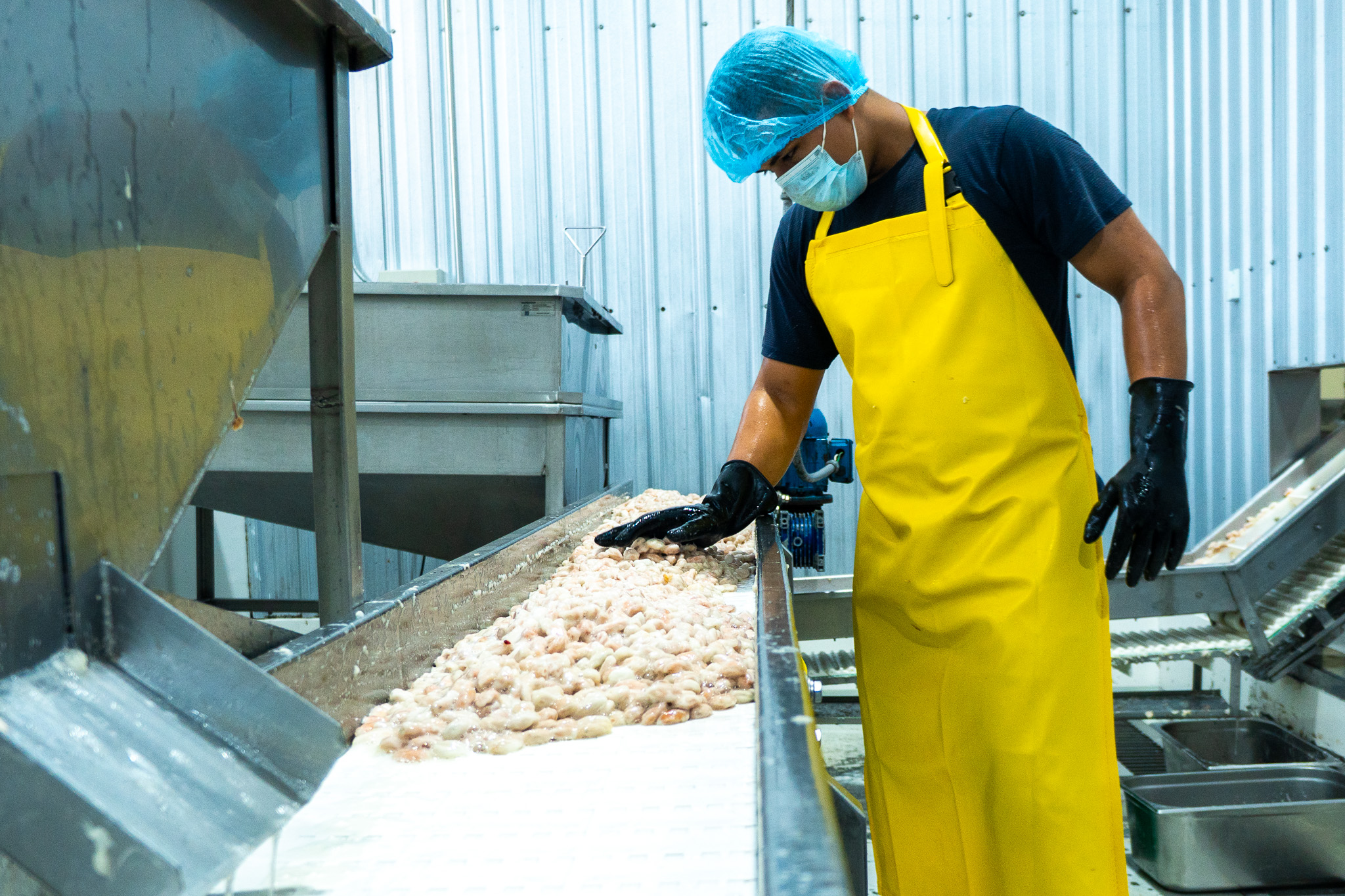
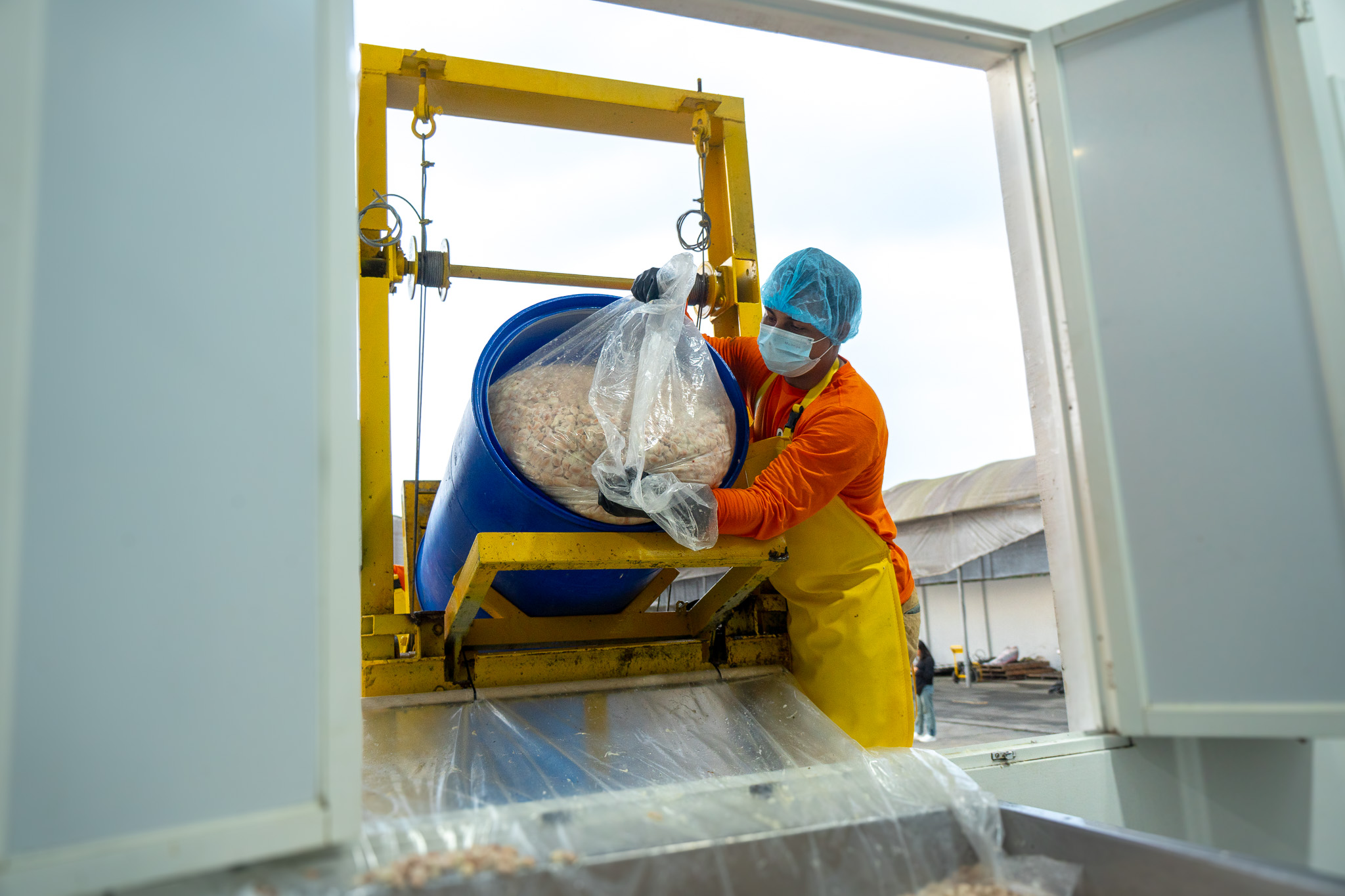
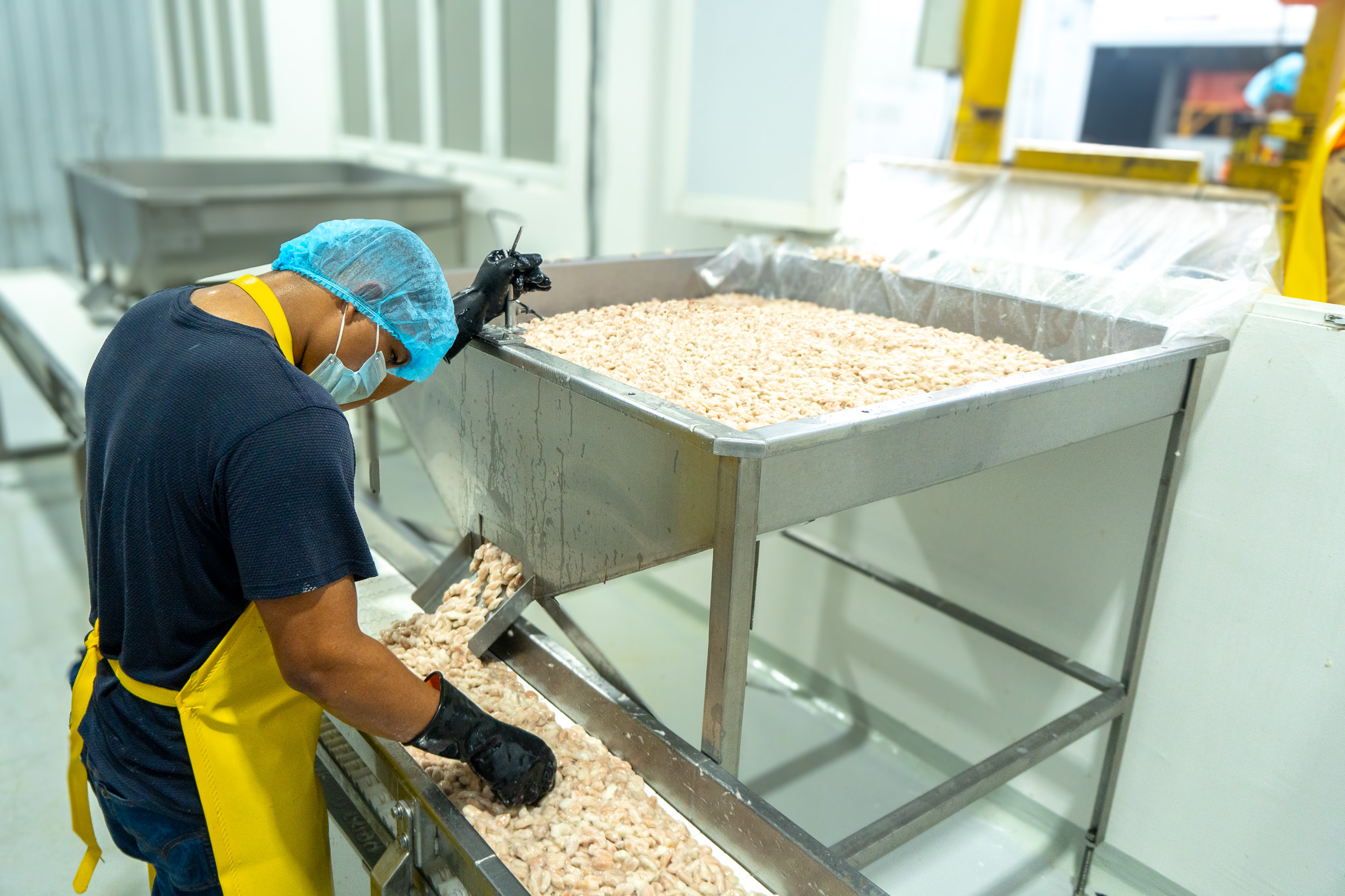
The beans, still coated in pulp, are fed into a depulper, which mechanically separates the pulp from the beans. We use every part of the fruit. The cleaned beans are then further processed for our Riviera Gold Origin cacao bean exportations.
The pulp becomes a delicious sweet fruit pulp that is frozen for further processing. This approach reduces waste, creates value-added products, and supports local communities, reflecting our commitment to circular, responsible cacao production.